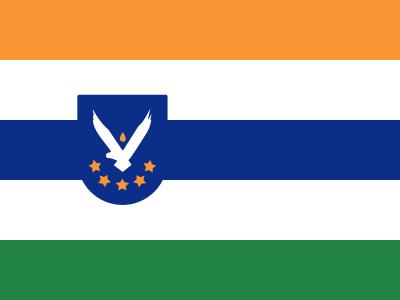
| Verde Republic | |
|---|---|
| Island of Sao Miguel | |
| Constituent Republic of Vekllei | |
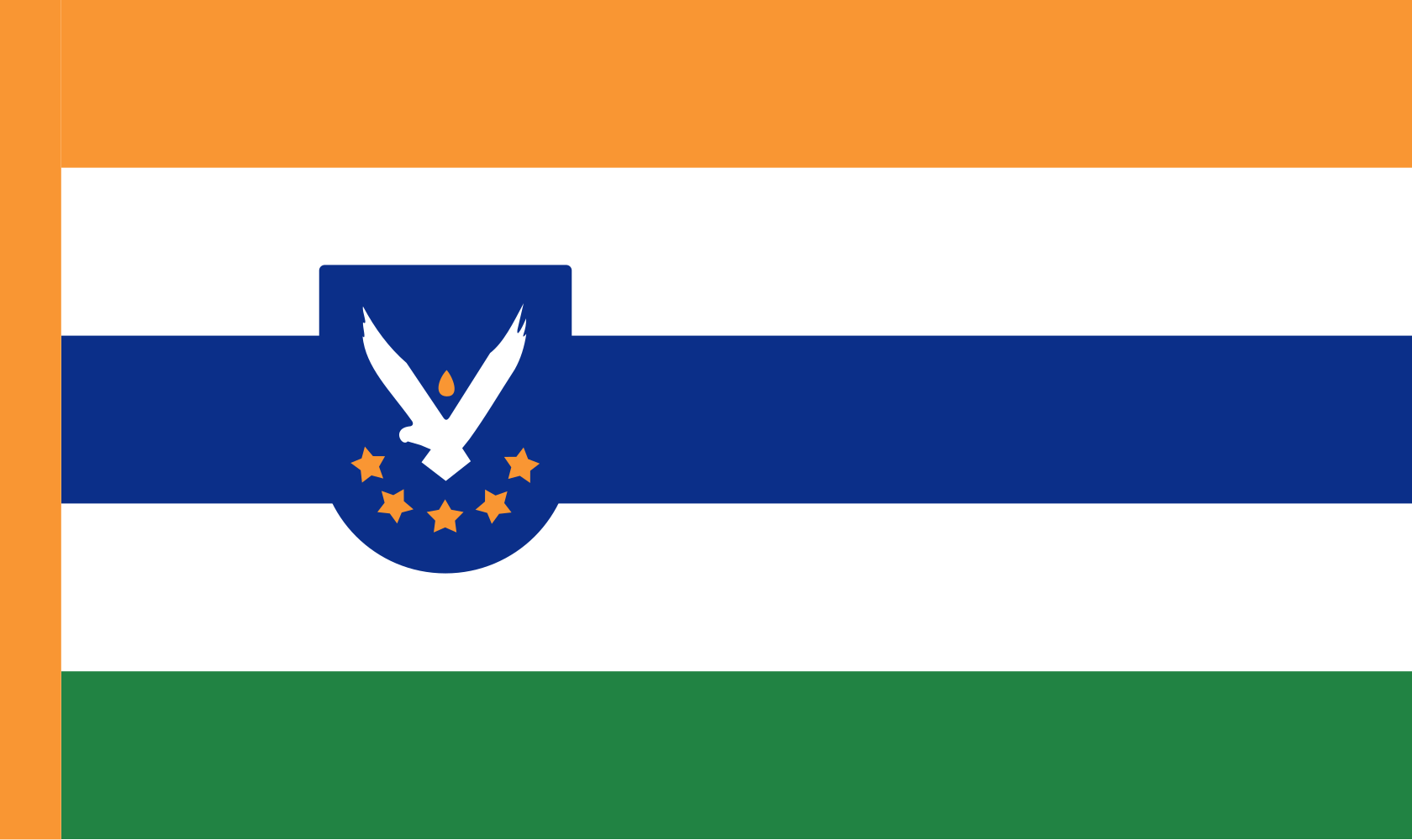 |
|
| Part of the Atlantic Region | |
| Accession | 1976, as part of the Azores Delegation |
| Area | 744.55 km² |
| Capital | Green Cape |
| Languages | English, Portuguese, Sinhala |
| Population | 246,820 |
The Costa Verde Republic (also Verde) is a constituent republic of Vekllei and part of the Atlantic Region. It is the largest and most populous island of the Azores archipelago, and seats the executive of the regional commonwealth. It is a narrow, verdant island of volcanic origin.
Verde was originally colonised by the Portuguese, who discovered the island in the 15th Century and established a small fishing colony thereafter. Throughout its history, Verde has been vulnerable to earthquakes and tidal waves, and the capital of Green Cape has been rebuilt several times. In the 19th Century, Verde rose to prominence as citrus traders, selling mostly to Southern Europe and the British Empire. Verde, along with the rest of the Azores, voted to secede from Portugal in the 1960s and after its interim government collapsed joined the Atlantic Federation in 1976. It inherited membership in Vekllei in 2015.
Verde enjoys a mild climate, and is renowned for its lush vegetation and scattered, lake-filled craters. Its peaks culminate in Vara Mountain at 1,100 meters above sea level. In the postwar period, its beauty and climate has seen many people from others parts of Vekllei move there.
Verde is the headquarters of the anti-Vekllei Azores Independence League, and has been responsible for attacks on police and federal buildings. They enjoy some political support in the Verde parliament but their influence has been waning.
Verde is a major producer of citrus and tea, and also exports significant amounts of pineapples and wine. Agriculture, shipbuilding and sugar refining are the primary components of its economy. It is also home to Atlantic University, the largest university in the Azores archipelago. The republic’s settlements are connected by both passenger and freight rail as well as trams.
- Adhesives
- Glass
- Grains
- Grapes
- Milk
- Molasses
- Paper
- Plastics
- Printing Ink
- Pulp
- Pulses
- Sugar
- Timber
Climate
Mild and humid year-round, with lush vegetation sustained by frequent Atlantic rainfall. Temperatures range from 13°C in winter to 26°C in summer, and cloud sits over the volcanic peaks for much of the year.
Public Holidays
- New Year’s Day 1 Jan
- Republic Day 15 Feb
- Carnival
- Good Friday
- Easter
- Commonwealth Day 1 May
- Espirito Santo
- Azores Day 1 Jun
- Corpus Christi
- Assumption Day 15 Aug
- All Saints Day 1 Nov
- Feast of Imm. Con. 8 Dec
- Christmas Day 25 Dec
- Holy Christ of the Miracles Church: the site of an important pilgrimage in the Roman Catholic Church, culminating in an annual procession.
- Sete Cidades: Municipality known for its beautiful volcanic lakes
- Furnas Geysers: Volcanic baths, geysers, and hot springs available for swimming.
- Verde Fruit Company: Oldest and largest pineapple plantation in Vekllei.
- Formoso Tea Plantations: Historic black and orange tea plantation.
- Verde Carrier Basin Atlantic Division 1,540
- Costa Verde Barracks Atlantic Division 1,880
- Verde Air Base Atlantic Division 1,370
- The Azorean Atlantic Hotel 50
- Airlink Costa Verde Station Commonwealth Airways 50
- Veletia Lines Costa Verde Port Commonwealth Lines 190
- Green Cape Metropolitan Railway CommRail 925
- Sete Cidades Lake Line CommRail 236
- Furnas Thermal Springs Tramway CommRail 237
- Fortune Bureau Headquarters Fortune
- Fortune Bureau Fortune 2,200
- Azores Tea Cooperative Fortune 2,600
- Air Station Verde
- Naval Station Verde
-
1982
Remaining Azores territories accede, including Costa Verde, Fayal, Flores, Graciosa, Maria, Mira, Pico, Porto Santo, Terceira, and Velas
-
1455
Costa Verde is discovered and settled by Portugal